Django roles are rarely greenfield. Most postings are for teams maintaining and extending a codebase that already exists — often a large one, sometimes a decade old. That changes what a hiring manager looks for. Alongside the framework itself, they want evidence that you can work safely inside someone else's models, run migrations without taking the site down, and keep the ORM from quietly destroying your response times. This guide covers what to put on a Django developer resume and how to phrase it.
What a strong Django resume demonstrates
- ORM depth, not just usage —
select_related,prefetch_related, query counts, and the N+1 problems you have actually fixed. - Safe migrations — schema changes shipped against live traffic on large tables without downtime.
- Django REST Framework — serializers, viewsets, permissions, and pagination, which appear in the majority of Django job posts.
- Async task handling — Celery or Django-Q for the work that must not happen in the request cycle.
- Legacy competence — upgrading Django versions, retiring dead apps, and adding tests to code that shipped without them.
Django developer resume summary example
Django developer with 5 years building and maintaining large Python web applications. Cut average page render time from 2.4s to 340ms by eliminating N+1 queries and adding Redis caching across a 200k-user marketplace. Experienced with Django REST Framework, Celery, and zero-downtime migrations on multi-million-row tables.
Skills and keywords for a Django resume
| Category | Examples to include (match the job post) |
|---|---|
| Framework | Django, Django REST Framework, Django ORM, Django admin, class-based views |
| Data | PostgreSQL, MySQL, migrations, query optimisation, indexing, Redis |
| Async & jobs | Celery, RabbitMQ, Django-Q, cron/management commands |
| Frontend touchpoints | Django templates, HTMX, Jinja2, static files, WhiteNoise |
| Testing | pytest-django, factory_boy, Django test client, coverage |
| Deploy | Gunicorn, Nginx, Docker, AWS/GCP, CI/CD, Sentry |
List Django REST Framework as its own entry. Many postings search for "DRF" separately from "Django", and a resume naming only the latter can be filtered out.
Django experience bullets that land
- Eliminated N+1 queries across the checkout flow using
select_relatedandprefetch_related, cutting database calls per request from 340 to 12 and page load from 2.4s to 340ms. - Designed 30+ Django REST Framework endpoints with nested serializers and object-level permissions, serving a React frontend and two partner integrations.
- Ran a zero-downtime migration adding indexed columns to an 80-million-row table using batched
backfills and
RunPythonwith reverse operations. - Moved PDF generation and email sending to Celery workers, cutting p95 request time 71% and removing timeout errors at peak.
- Upgraded a legacy application from Django 2.2 to 4.2 across six minor versions, resolving 200+ deprecation warnings with no customer-visible regressions.
- Added pytest-django coverage to an untested billing module, raising coverage from 0% to 76% and uncovering two long-standing rounding bugs.
Django vs FastAPI on your resume
These attract different hiring managers, and framing matters if you know both:
| Signal | Django roles want | FastAPI roles want |
|---|---|---|
| Primary strength | Full-stack delivery, admin, ORM depth | Async throughput, API-first design |
| Typical codebase | Established, large, long-lived | Newer services, often microservices |
| Emphasise | Migrations, DRF, Celery, query tuning | async/await, Pydantic, latency numbers |
If you know both, name both — but lead with the one the posting is hiring for and put your strongest matching bullets first. See the FastAPI developer resume guide if you are targeting async API roles.
Common Django resume mistakes
- Saying "used Django" with no depth. Every applicant used Django. Name the parts — ORM, DRF, admin, signals, middleware — and what you did with them.
- No performance numbers. Django roles are frequently about fixing slow pages; query counts and response times are the most persuasive numbers you have.
- Omitting migration experience. Confident, safe migrations on a live database are a genuine differentiator that few candidates mention.
- Ignoring the legacy angle. If you have upgraded Django versions or added tests to untested code, say so — most Django jobs involve exactly that.
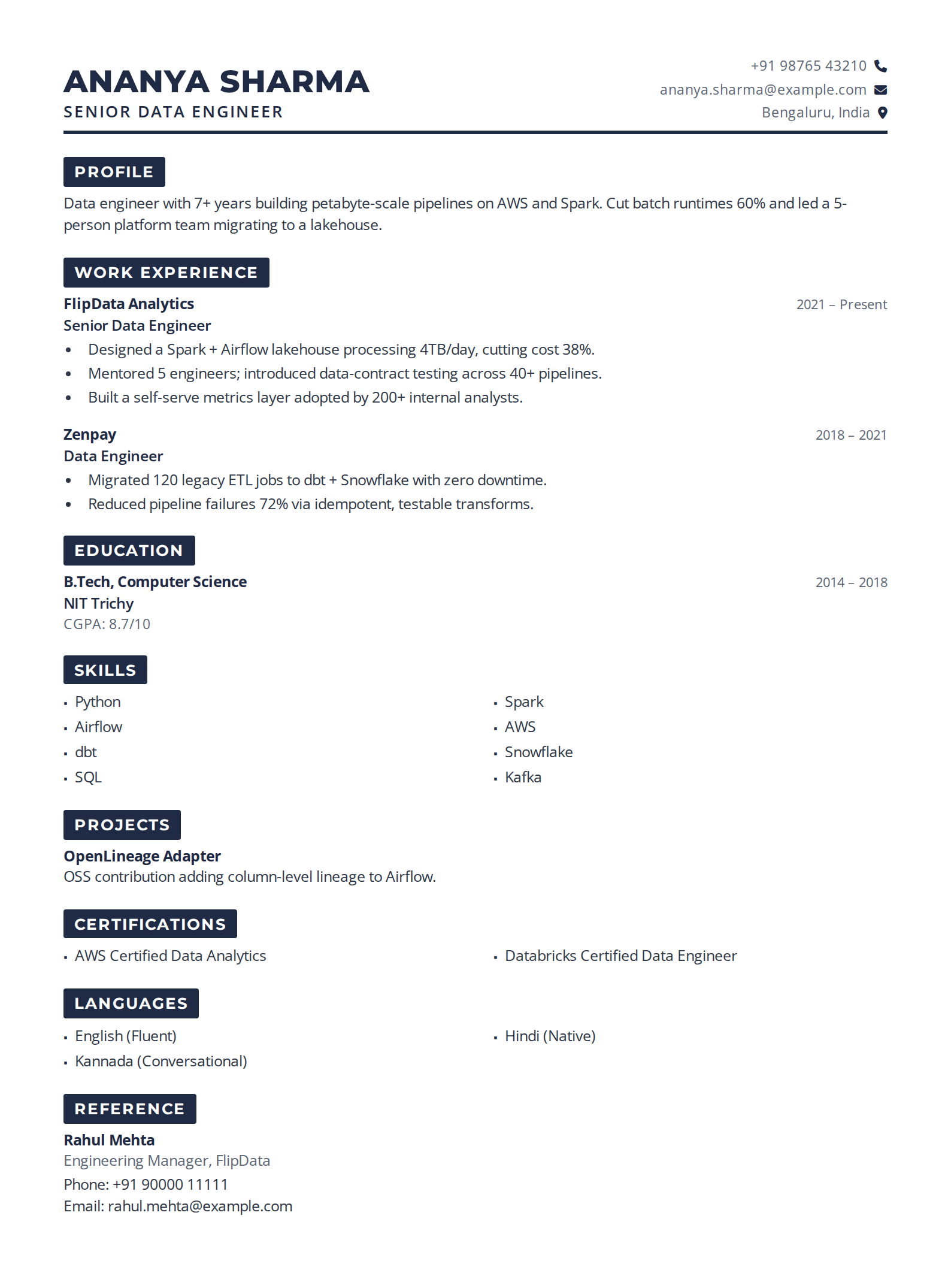
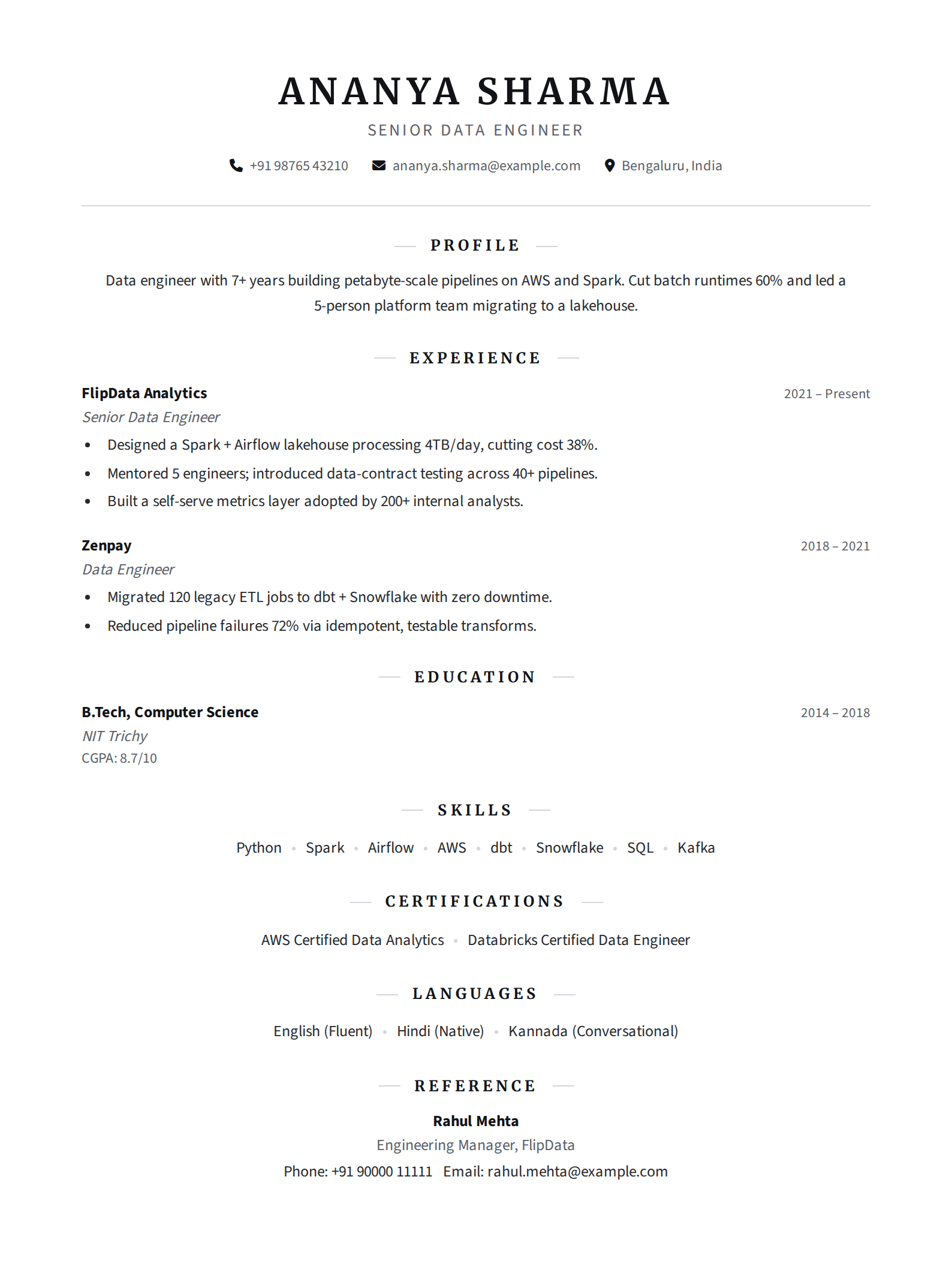
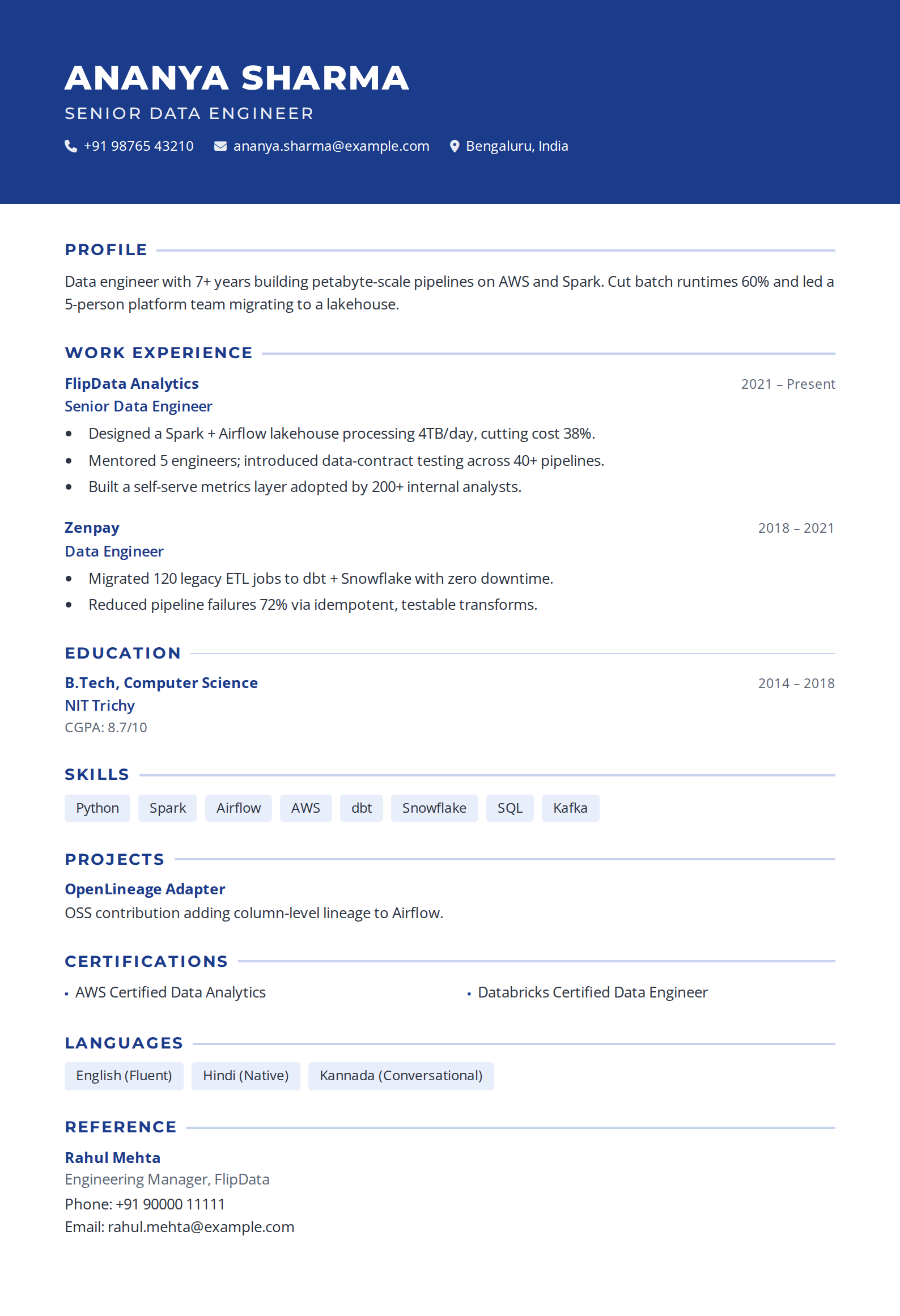
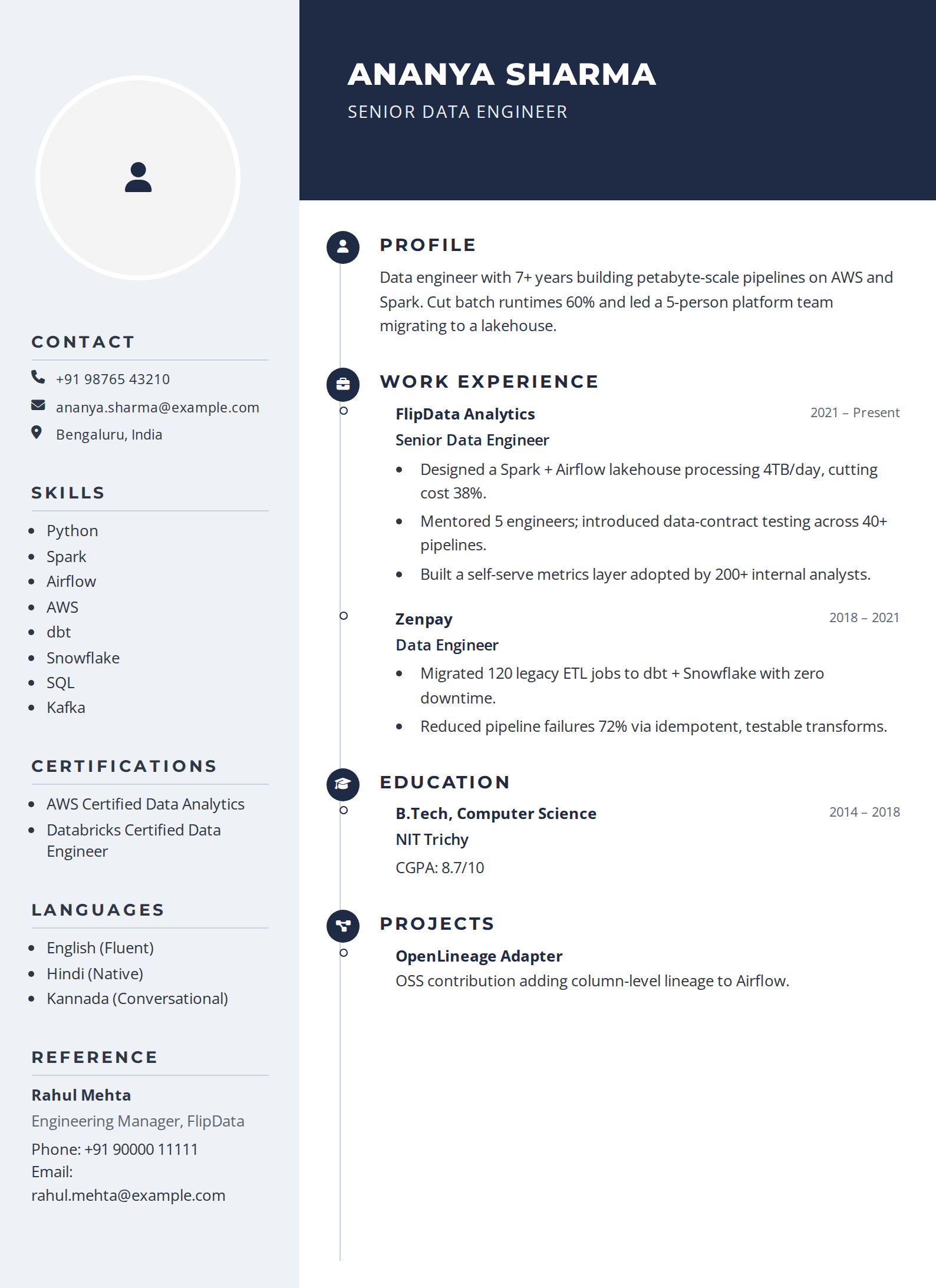
Once your resume is drafted, run it through a free ATS resume checker, then pick a template below and build the final version. For broader Python roles, see the Python developer resume guide.
 Continue with Google