FastAPI has become the default choice for new Python APIs — and hiring teams know it. But "FastAPI" alone on a resume tells a recruiter very little. What gets you shortlisted is proof that you understand async Python: that you know when concurrency actually helps, how you validate data at the edge, and what happened to latency and throughput after you shipped. This guide walks through a FastAPI developer resume section by section, with example bullets you can adapt to your own work.
What makes a strong FastAPI developer resume?
FastAPI roles are backend roles with a performance bias. The strongest resumes make these five things obvious within one screen:
- Async fluency, stated explicitly —
async/await,asyncio, and ASGI servers such as Uvicorn or Hypercorn, not just "Python". - Pydantic as a named skill — it is FastAPI's validation layer and it is parsed as its own keyword by most applicant tracking systems.
- Measured performance work — p95 latency, requests per second, or concurrency limits before and after your change.
- Production ownership — Docker, CI/CD, migrations, monitoring, and on-call, not only feature delivery.
- API design judgement — versioning, pagination, error contracts, and auto-generated OpenAPI documentation that other teams actually consumed.
FastAPI developer resume summary example
Lead with a 2–3 sentence summary that front-loads the framework, the scale you have worked at, and one measurable outcome:
Backend engineer with 4+ years building async Python services in FastAPI, Pydantic, and PostgreSQL. Migrated a Flask monolith to six FastAPI microservices, cutting p95 latency from 720ms to 140ms at 3k requests/second. Comfortable owning services end to end — schema design, async SQLAlchemy, Docker, and production monitoring.
Skills and keywords to put on a FastAPI resume
Mirror the job description first. Beyond that, most FastAPI postings expect a recognisable core. Group your skills so both the parser and the human reviewer find what they need:
| Category | Examples to include (match the job post) |
|---|---|
| Core language | Python 3.11+, async/await, asyncio, type hints, OOP |
| Framework & validation | FastAPI, Pydantic, Starlette, Uvicorn, Gunicorn, OpenAPI/Swagger |
| Data layer | PostgreSQL, async SQLAlchemy, Alembic, Redis, MongoDB |
| Async & messaging | Celery, RabbitMQ, Kafka, background tasks, WebSockets |
| Testing | pytest, pytest-asyncio, httpx AsyncClient, factory fixtures, coverage |
| Security | OAuth2, JWT, dependency injection, rate limiting, CORS |
| Deploy & observe | Docker, Kubernetes, AWS/GCP, CI/CD, OpenTelemetry, Sentry, Datadog |
If your services use async def endpoints, list asyncio separately —
several ATS configurations scan for it independently of "FastAPI".
How to write each section of your FastAPI resume
Work experience
Name the framework, say what you built, and finish with a number. Vague ownership claims read the same as no claim at all:
- Rebuilt a synchronous Flask checkout service as an async FastAPI service, reducing p95 latency from 820ms to 130ms under 2k concurrent users.
- Designed Pydantic request/response models across 40+ endpoints, cutting validation-related production errors by 70%.
- Introduced pytest-asyncio and
httpx.AsyncClientintegration tests, raising coverage from 52% to 88% and removing a recurring release-day rollback. - Split a monolith into six FastAPI microservices on Kubernetes, shortening deploy cycles from weekly to daily.
- Instrumented services with OpenTelemetry, cutting mean time to diagnose incidents from 45 minutes to under 10.
Projects
For career changers and junior applicants, projects carry real weight — FastAPI's small surface
area makes it easy to show depth quickly. For each one, state the problem, the stack, and the
measurable result. A repo with a Dockerfile, tests, and a short README beats three unfinished
tutorials. Link the live /docs OpenAPI page if the service is publicly hosted; letting a
reviewer click through your API contract is unusually persuasive.
Education & certifications
List your degree if you have one. FastAPI has no official certification, so credibility comes from adjacent proof: cloud certifications such as AWS Certified Developer, a Kubernetes credential like CKA, or visible open-source contributions to the Python async ecosystem.
Do's and don'ts
| ✓ Do | ✗ Don't |
|---|---|
| Name FastAPI, Pydantic, and asyncio separately | Write only "Python web frameworks" |
| Quantify latency, throughput, and error-rate wins | Say you "improved performance" with no number |
| Show you know when async helps — and when it doesn't | Claim async everywhere without understanding I/O-bound work |
| Mention the database driver and migration tool you used | List every library you have ever imported |
| Keep formatting clean and ATS-readable | Hide key details in text boxes, columns, or images |
Beat the ATS: tailor your resume to the job
Most mid-size and large employers screen with an applicant tracking system before a human opens your file. To get through:
- Pull 8–12 keywords from the posting and work the honest ones into your skills and bullets.
- Spell out framework names in full at least once — "FastAPI", not just "the API layer".
- Use standard headings — "Experience", "Skills", "Projects", "Education".
- Submit a PDF unless the posting explicitly asks for .docx.
- Run it through a free ATS resume checker and close the gaps before you apply.
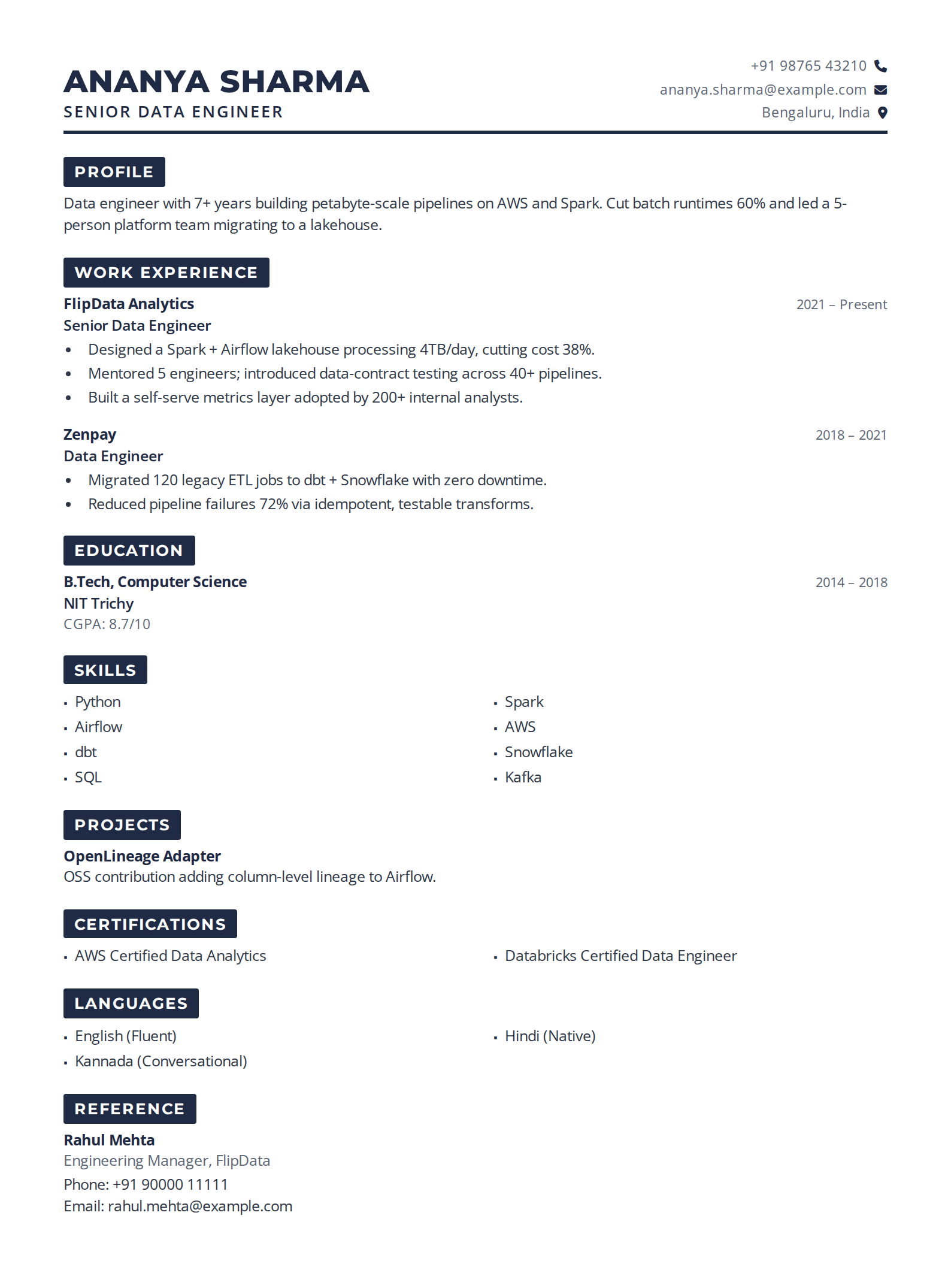
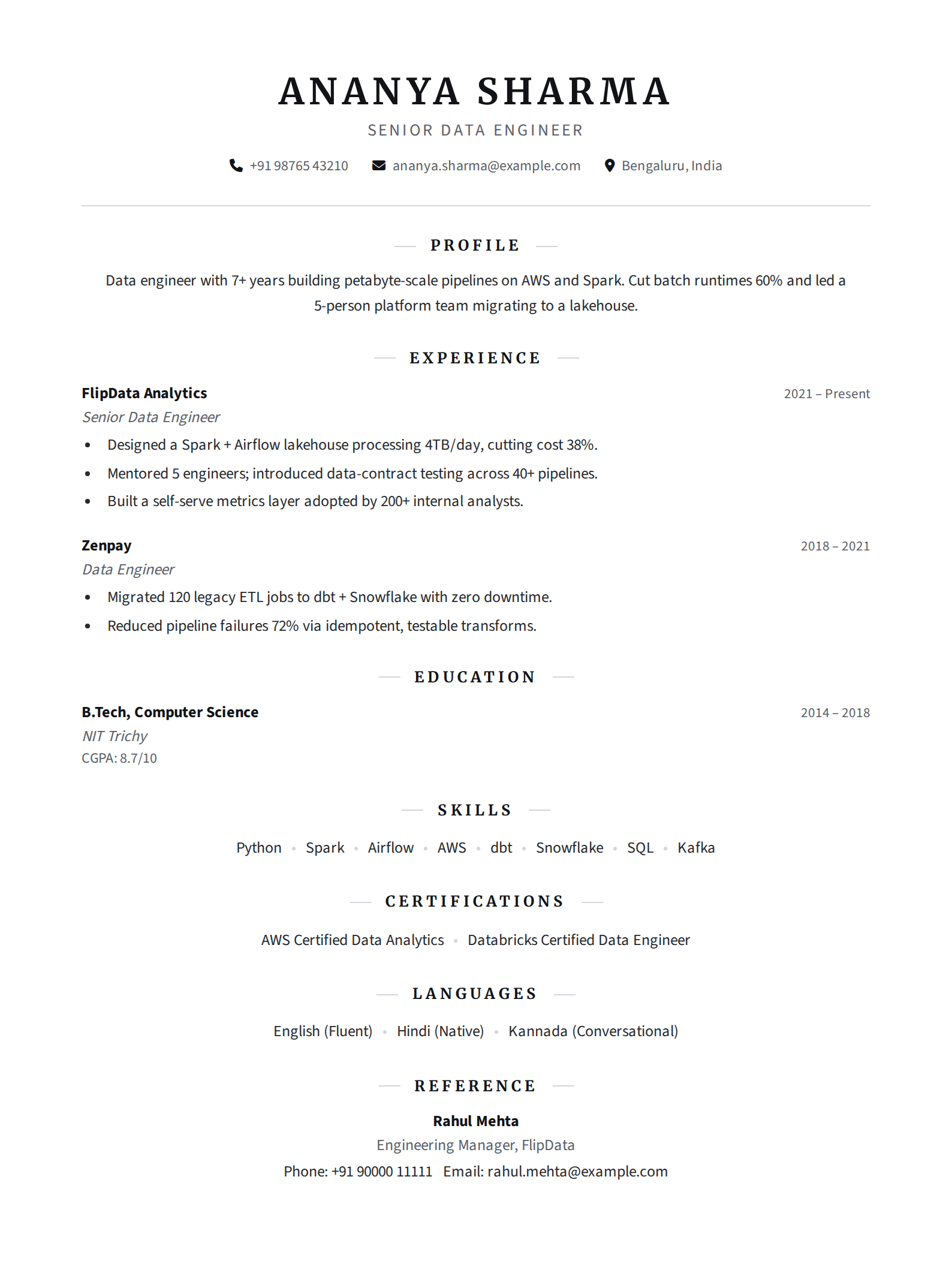
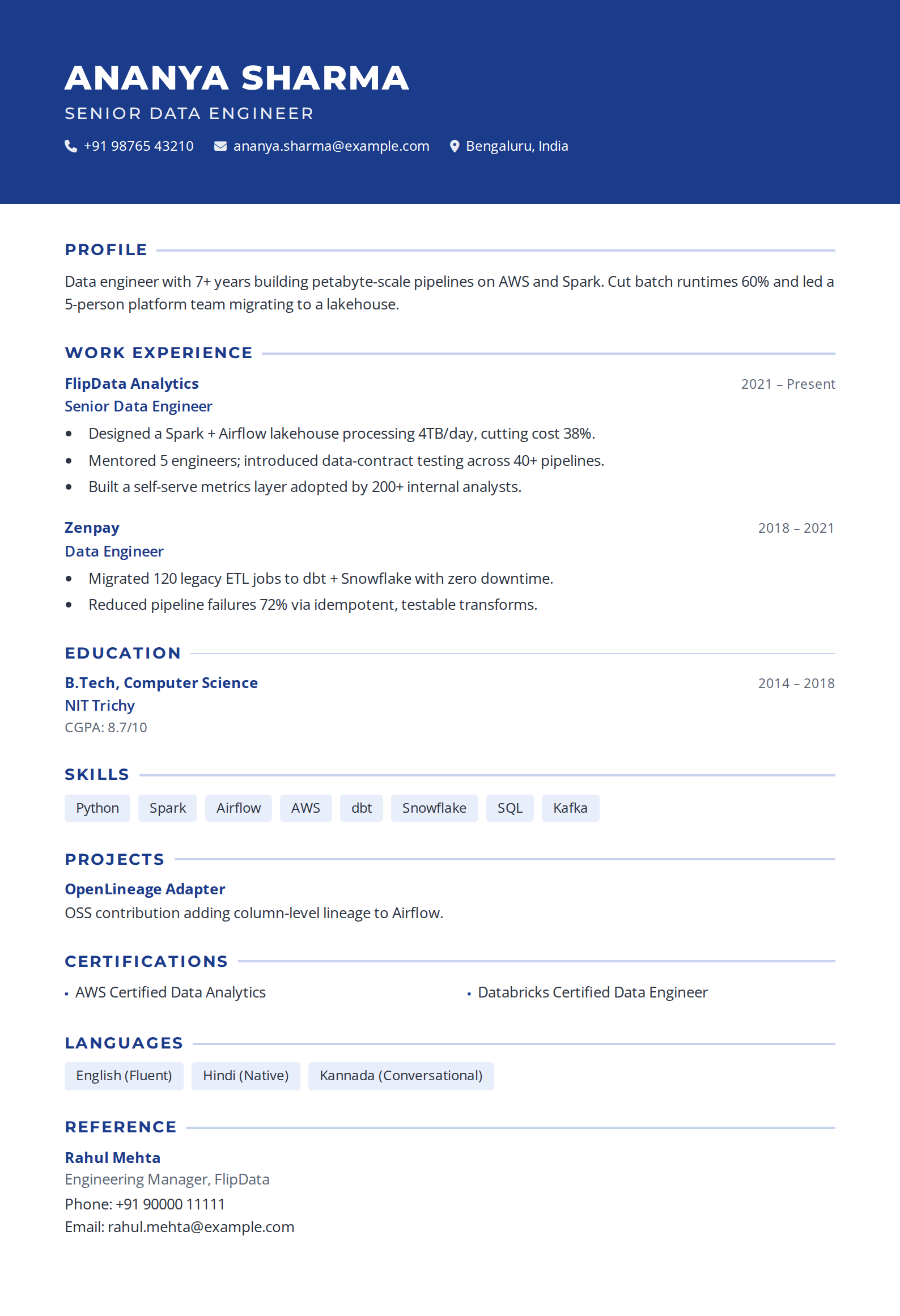
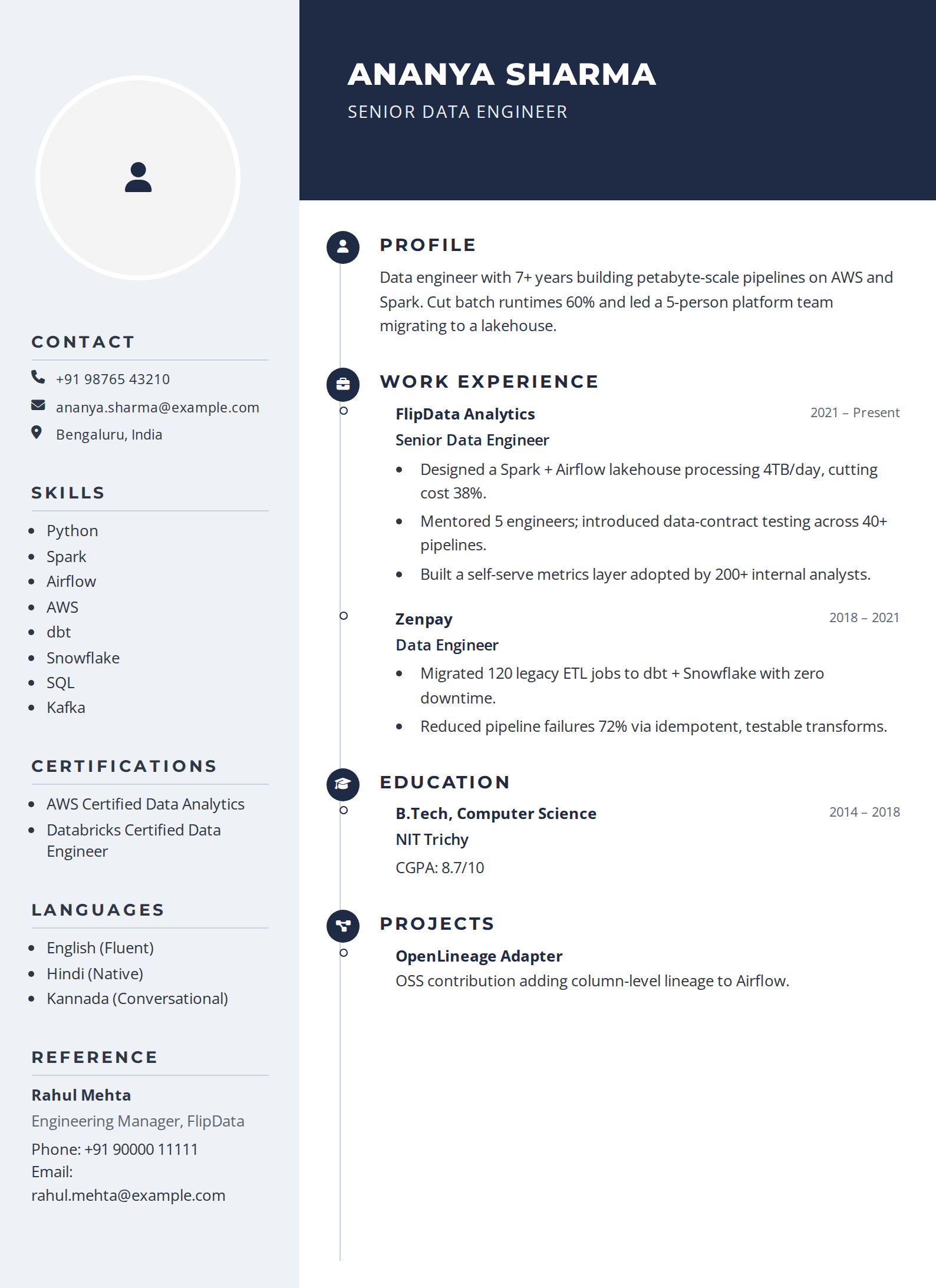
Writing a broader Python application too? Start from our Python developer resume guide, then pick a template below and get an instant score.
 Continue with Google